
SHS063: How To Start & Run A Pressure Washing Business In 2026 With Joshua From Proclean Exterior Services!
Intro
Starting a pressure washing business may seem like it requires thousands of dollars in equipment, a trailer, and an LLC before you can even think about landing your first customer. But according to entrepreneur Joshua Adegboye, that's one of the biggest misconceptions new business owners have.
In this episode of The Side Hustler's Society, Elijah Bilel sits down with Joshua to discuss how he built his pressure washing business in the Dallas–Fort Worth area, the sales strategies that helped him land customers, and why generating revenue should always come before buying expensive equipment.
Whether you're looking to start a pressure washing business or another local service business, this episode offers practical advice that can save you both time and money.
Intro to Joshua Adegboye
Joshua Adegboye is the Founder and CEO of ProClean Exterior Services, a Lewisville, Texas-based company specializing in exterior property services throughout the Dallas–Fort Worth metroplex.
His company provides:
Pressure washing
Window cleaning
Gutter cleaning
Concrete installation
Concrete restoration
Joshua focuses on helping homeowners improve curb appeal, maintain property value, and keep their homes looking their best year-round through professional exterior cleaning services.
Website:https://procleanexterior.com/
Episode Overview
Joshua's entrepreneurial journey is especially interesting because he comes from a technology background.
Instead of relying solely on his white-collar skills, he recognized an opportunity to build a blue-collar business that provided consistent demand and immediate cash flow.
Throughout the conversation, Joshua shares exactly how someone can get started without spending thousands of dollars upfront.
One of his biggest lessons?
Get the customer first. Buy the equipment later.
Instead of financing expensive equipment before knowing if people actually want your services, Joshua recommends finding customers first, renting equipment when necessary, completing the work, and then using your profits to gradually build the business.
The conversation also covers:
Door-to-door sales
Customer acquisition
Building trust with homeowners
Marketing a local service business
Why reviews matter
Creating a professional online presence
Growing beyond pressure washing
Ready to Start Your Own Side Hustle?
Starting a business is much easier when you have a clear roadmap.
If you're looking for a business that matches your skills, interests, and financial goals, check out The Personalized Side Hustle Starter Kit.
👉 Get started here: https://www.thesidehustlersociety.com/offers/rLFxowrn/checkout
Listen to the Episode
Check us out on Apple Podcasts or Spotify! While you're there, hit subscribe so you don't miss our latest episodes!
The Side Hustler's Society Resources
Financial Anatomy Personality Report
Quick Takeaways
Joshua recommends finding customers before purchasing equipment.
Renting equipment is a smart way to keep startup costs low.
Door-to-door marketing remains one of the fastest ways to land local service clients.
Homeowners buy solutions—not pressure washing itself.
A professional website helps establish credibility with potential customers.
Google reviews are one of the strongest trust signals for local businesses.
Reinvesting profits helps businesses grow without unnecessary debt.
Consistent action beats endless planning.
Start Selling Before You Start Spending
One of the biggest myths Joshua addresses is that entrepreneurs need expensive equipment before they can begin.
Instead of financing thousands of dollars worth of pressure washing equipment, he recommends a much simpler approach.
Find someone who wants their house or driveway cleaned.
Once you've secured the customer, rent the equipment from a local home improvement store, complete the work, collect payment, and use the profit to fund future jobs.
After repeating this process several times, you'll have enough cash flow to purchase your own equipment without taking on unnecessary debt.
It's a simple strategy that dramatically reduces the risk of starting a business.
Customers Are More Valuable Than Equipment
Joshua believes many new entrepreneurs focus on the wrong problem.
Rather than asking:
"What equipment do I need?"
They should ask:
"How do I find my first customer?"
Without customers, expensive equipment simply sits unused.
Revenue creates businesses—not equipment.
Once you consistently generate work, upgrading tools becomes much easier.
Door-to-Door Sales Still Works
One of the most valuable parts of the conversation is Joshua's discussion about door-to-door sales.
While many entrepreneurs hope social media alone will generate clients, Joshua explains that speaking directly with homeowners remains one of the fastest ways to get started.
By identifying homes that visibly need pressure washing and introducing himself professionally, he was able to begin building a customer base before having a large marketing budget.
The lesson applies well beyond pressure washing.
Many service businesses grow because their owners are willing to have conversations that competitors avoid.
Why Homeowners Actually Buy Pressure Washing
Customers aren't simply paying for clean concrete.
They're paying for:
Better curb appeal
A cleaner-looking home
Increased property value
Pride in ownership
Preventative maintenance
Understanding these motivations allows business owners to market more effectively.
Rather than selling pressure washing, Joshua focuses on the outcomes homeowners care about.
Your Website Is a Social Background Check
Joshua also discusses the importance of having a professional website.
Even if customers discover your business through referrals or social media, many of them will search your company online before making a decision.
A website serves as a digital first impression.
It helps potential customers verify that your business is legitimate, showcases previous work, and answers common questions before they ever pick up the phone.
For many homeowners, it's essentially a social background check before hiring someone to work on their property.
Reviews Build Trust
Joshua emphasizes that customer reviews are one of the most valuable marketing assets a local service business can have.
Positive reviews provide social proof and help remove uncertainty for new customers.
Whether someone finds your business through Google or receives a referral, seeing consistent positive feedback increases confidence and makes it easier for them to choose your company over competitors.
Build Systems As You Grow
As ProClean Exterior Services expanded, Joshua learned that sustainable growth requires more than simply getting more customers.
Successful businesses eventually need systems for:
Marketing
Scheduling
Customer communication
Job completion
Follow-up
Review collection
Building these systems allows owners to spend more time growing the business instead of constantly reacting to daily problems.
Who This Episode Is For
This episode is ideal for:
Anyone interested in starting a pressure washing business
Entrepreneurs looking to start a local service business
People interested in low-cost business ideas
Side hustlers looking for scalable service businesses
Business owners who want to improve lead generation
Anyone curious about door-to-door sales and customer acquisition
Key Topics Covered
How to start a pressure washing business
Finding customers before buying equipment
Renting versus purchasing equipment
Door-to-door sales strategies
Marketing local service businesses
Building trust with homeowners
Why websites matter for service businesses
The importance of Google reviews
Growing a blue-collar business
Reinvesting profits for long-term growth
Watch the Podcast on YouTube!
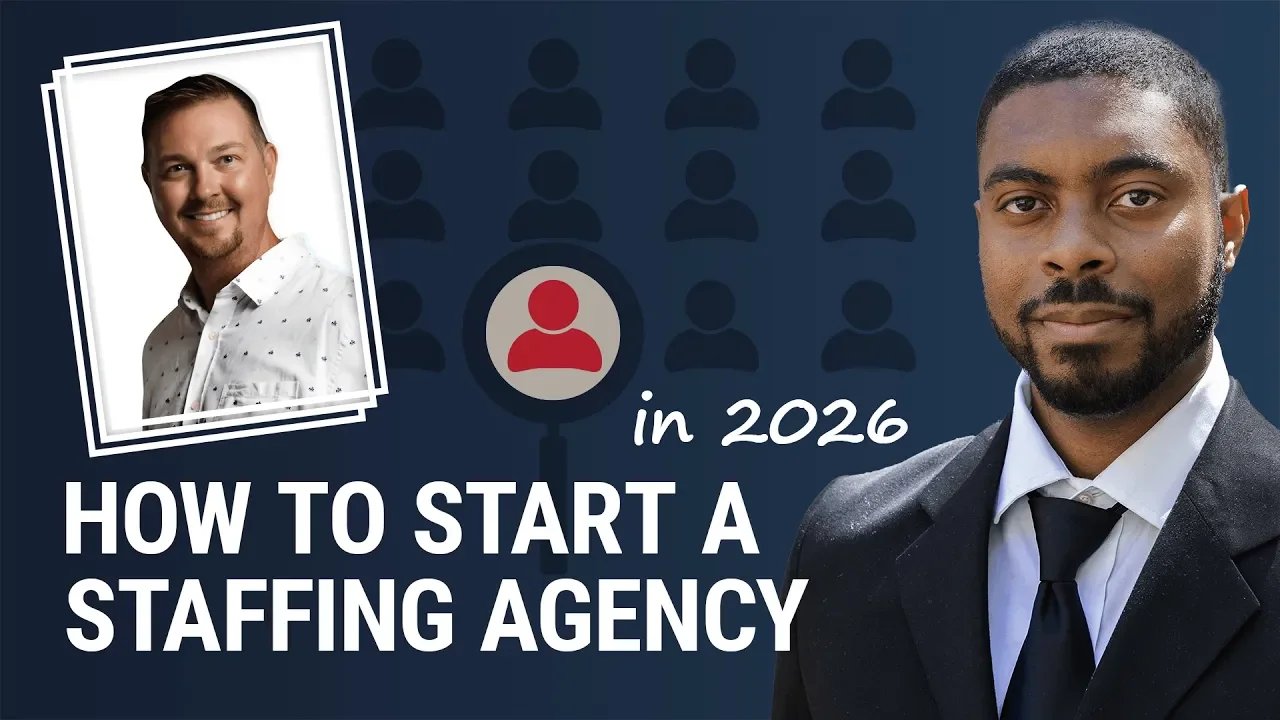
SHS062: How To Make 6 Figure With A Staffing Agency With Brian Samson From Plugg Technologies!
Most people have interacted with a staffing agency at some point, whether signing up for temp work in their early career or working alongside contract engineers at a tech company. But almost nobody understands what is happening on the other side of that transaction: how the money flows, what the risk looks like, and why the person running the agency is essentially operating a small bank in addition to a recruiting business. Elijah Bilel, host of the Side Hustlers Society, set out to change that in a recent episode with Brian Samson.
Elijah Bilel, who brings a deep background in the gig economy and side hustle space, pushed for specifics throughout: startup costs, cash flow traps, software requirements, and the exact mechanics of how a staffing agency earns money. What came out of the conversation is a clear-eyed look at two very different business models that share a name but operate almost nothing alike.
Brian Samson has been building staffing and nearshore businesses for 11 years. He has grown three separate companies from zero to $4 million in annual recurring revenue each, made over 500 placements, moved to Buenos Aires with two suitcases to build a company to 80 engineers
from scratch, and now runs Plugg Technologies from Hawaii. He is also the host of The Nearshore Cafe Podcast. When he talks about the mechanics of staffing, he is drawing on more than a decade of operating inside the model, not theorizing about it.
Listen to the Episode
Check us out on Apple Podcasts or Spotify! While you're there, hit subscribe so you don't miss our latest episodes!
The Side Hustler's Society Resources
Financial Anatomy Personality Report
The Two Staffing Models Almost No One Distinguishes
The staffing industry gets discussed as if it were one thing. It is not. There are two fundamentally different business models under the same umbrella, and choosing between them determines your startup cost, your risk profile, your cash flow, and your exit value.
The first is permanent placement, which Samson compares directly to real estate. "It's kind of like being a realtor. You don't get paid until it's successful," he explained. A permanent placement recruiter finds a candidate, connects them with a hiring company, and collects a fee only if the placement closes, typically around 20% of the candidate's base salary. Place
someone at $100,000 and you earn a $20,000 check. The upside is that startup costs are essentially zero: a laptop, a phone, and an internet connection. The downside is that nothing recurs. Every month starts at zero.
The second model is contract staffing, which is what Samson runs through Plugg Technologies. Here, the agency places contractors with client companies and bills an hourly or monthly rate, collecting the spread between what the client pays and what the contractor earns. Revenue recurs as long as the engagement continues. The tradeoff is that you have to pay contractors before clients pay you, which means floating payroll and acting, as Samson put it, like "a half staffing company, half bank."
The recurring nature of contract staffing also makes it a more valuable business to sell. Buyers pay for predictable future cash flows, and a staffing book with long-term contractors has exactly that. A permanent placement business has none of it.
The Cash Flow Reality Nobody Warns You About
The biggest operational challenge in contract staffing is not finding clients or placing candidates. It is surviving the gap between when you pay people and when clients pay you.
Samson was direct about what this looks like at scale: "I've got one, sometimes two months of payroll that I have to cover before I get paid. So when you get to a certain size, you're running a half staffing company, half bank." For a small book of business, that might mean floating one paycheck. For a company with dozens of contractors, it can mean carrying hundreds of thousands of dollars in payroll before a single invoice clears.
Elijah Bilel drew a parallel from his own network: a friend who runs a six-figure janitorial business started landing larger contracts with 60 and 90-day payment terms. The revenue was real, but the buffer required to cover payroll while waiting was something he had not fully planned for. Samson confirmed this is one of the most common scaling traps: "You can't go after bigger customers because what's the issue with big customers? Longer payment terms."
The practical tool for managing this is a business line of credit, which Samson has used alongside his own capital at different stages. The math is simple: is the interest cost of tapping the line lower than the cost of passing on the client? Usually it is, but the line has to be established before you need it, not after.
He also noted the downside risk directly. A client went bankrupt recently, leaving unpaid invoices, and Samson still had to cover the contractors' pay for that period. "I've got a few invoices that will probably not get paid, but I still had to pay the people, right? I still have to pay the people that did the work." That is the nature of the model: the agency absorbs client credit risk in a way that permanent placement recruiters never do.
How Much It Actually Costs to Start
For anyone seriously considering the contract staffing path, Samson offered a concrete floor: "I think $10,000 would probably at least get you going." That covers floating one paycheck for an initial placement and gives you enough runway to start building cash flow.
He also pointed out a lever that early-stage operators can use: offering a discount to a first client in exchange for faster payment terms. A 15-day net arrangement with a small startup, even at a reduced margin, gets the cash flow machine moving in a way that a 90-day net arrangement with a larger client cannot. Margin matters less than velocity when you are trying to establish the initial cycle.
One thing that does not cost anything: a license. Unlike real estate agents, who must be licensed before they can operate, recruiting has no equivalent requirement. "Recruitering, nope. You don't need anything to get started," Samson confirmed. That removes one barrier that stops people from exploring the business.
On the software side, Samson recommended starting with Google Sheets and only moving to a dedicated applicant tracking system once the volume demands it. For those who want a purpose-built tool, enterprise platforms like Bullhorn exist, though they are priced accordingly. The essential columns for a candidate tracking spreadsheet are straightforward: name, role, location, phone, email, and LinkedIn. Simple enough to build in an afternoon, functional enough to run a small book of business for months.
Why Nearshore Staffing Has Specific Structural Advantages
Samson's flagship business, Plugg Technologies, is not a general staffing agency. It focuses specifically on placing senior Latin American tech professionals with U.S. companies on a contract basis, and the model reflects lessons learned across multiple prior businesses.
Elijah Bilel asked Samson to describe what Plugg actually does, and the answer was concise: "We do long-term contractors from Latin America for US companies. Could be software, could be marketing, could be a virtual assistant. But Latin America can do all of that. It's a little bit more expensive than Asia, but I think you more than make up for it in value because everybody's on your time zone."
The time zone piece is not a minor convenience. It is the operational difference between a team that can collaborate in real time and one that is permanently running a half-day behind on every decision. Samson built his first company in Buenos Aires partly because he had traveled through Latin America earlier and recognized that same-time-zone talent was being systematically undervalued by U.S. companies conditioned to think of offshore hiring as synonymous with Asia.
He also described the structural decision to pay contractors in U.S. dollars rather than local currencies, eliminating the currency arbitrage game that consumed time and attention in earlier ventures. That simplification, along with expanding the geographic scope beyond Argentina and removing the project management layers to run a pure staffing play, is what Plugg reflects.
The Mistake That Cost the Most: Hiring Salespeople Too Early
When Elijah Bilel asked about the biggest mistake Samson had made in the staffing business, the answer was specific and counterintuitive for anyone who has been told to delegate sales quickly.
"I hired salespeople really early. And I don't think you need to. Even though sales can feel intimidating to a lot of people who've never done it, as a founder of a business, you're going to have to get that skill one way or the other. But also, companies really appreciate talking to the business owner."
The insight is that founder credibility substitutes for sales skill in the early stages. Clients who might scrutinize a pitch from a hired sales rep will extend meaningful grace to a business owner promoting their own company. That grace accelerates early growth faster than a polished but expensive sales function does. The skill gap gets closed through reps. The relationship advantage cannot be purchased.
He extended the same logic to client relationships in general: "I've had some friends that have been clients for a decade, and clients for multiple different companies that I've had. Just because I take care of them, they take care of me. It's a long game with this stuff." Relationships built before anyone has money to spend become the foundation of a business once everyone is in a buying position. That observation is not unique to staffing, but in a relationship-driven services business it is particularly true.
How to Get Started with a Staffing Business
Based on what Samson covered with Elijah Bilel throughout the episode, here are four concrete steps for anyone evaluating this path:
1. Decide which model fits your capital position. If you have limited capital and want to test the market, permanent placement requires almost nothing to start. If you have $10,000 or more and want to build recurring revenue, contract staffing is the more valuable long-term model. Do not attempt contract staffing without understanding you will need to float payroll from day one.
2. Start with relationships, not cold outreach. Samson's first clients came from people who already knew and trusted him. Map your existing network before building any
marketing infrastructure. Former colleagues, managers, and peers who are now in hiring positions are the most likely early clients. A warm introduction from someone who knows your work ethic closes faster than any automated outreach sequence.
3. Build your tracking system before you need it. A Google Sheet with the right columns, candidate name, role, location, phone, email, LinkedIn, is enough to get started. Build the habit of maintaining it from placement one. The transition to a proper ATS like Bullhorn becomes necessary around a few hundred candidates. Starting organized makes that transition far less painful.
4. If nearshore hiring is the angle, start by understanding the model. Visit plugg.tech to see how a mature nearshore staffing operation is structured, what roles are being placed, and how the U.S.-entity model works for clients who want to avoid international compliance complexity. Whether you are looking to hire Latin American talent or build a similar model yourself, understanding how the infrastructure works is the starting point.
The staffing business is one of the few services models where the core mechanics, finding talent, matching it to demand, and taking a spread, have not changed in decades. What has changed is where the talent comes from, how collaboration happens, and what clients are willing to pay for. Elijah Bilel's conversation with Brian Samson covers the full picture: the economics, the risks, the cash flow realities, and the strategic decisions that determine whether a staffing business stays small or scales. For anyone seriously considering this path, it is a useful hour.
�� Listen to the full episode: How to Start a Staffing Agency with Brian Samson | Side Hustlers Society �� Learn more about nearshore hiring: plugg.tech �� The Nearshore Cafe Podcast
People Also Ask
What is a nearshore staffing agency and how does it work? A nearshore staffing agency connects U.S. companies with skilled professionals in Latin America who work in the same or overlapping time zones. Unlike offshore models that rely on workers in Asia, nearshore hiring
eliminates the need for overnight shifts and enables real-time collaboration. Brian Samson, founder of Plugg Technologies, runs a nearshore staffing operation that places senior Latin American engineers and other technical professionals with U.S. companies, billing through a U.S. entity to keep the client experience straightforward.
Why do U.S. companies choose Latin American talent over India or the Philippines? The primary advantage is time zone alignment: Latin American professionals work during standard U.S. business hours, enabling real-time communication on Slack, Zoom, and project
management tools. Beyond scheduling, Brian Samson points to cultural alignment, strong English fluency that mirrors American idiom, and a workforce shaped by economic volatility to be adaptable and resourceful. While Asia can be cheaper on an hourly basis, Samson argues that U.S. companies more than make up the cost difference in collaboration quality and productivity.
What types of roles can be filled through a nearshore staffing agency? Nearshore staffing agencies like Plugg Technologies primarily place technical roles including software developers, QA engineers, DevOps specialists, and other individual contributors. Brian Samson notes that marketing professionals and virtual assistants are also commonly placed through Latin American staffing channels. The model works best for roles requiring ongoing collaboration with U.S. teams, where time zone alignment translates directly into faster decision-making and tighter feedback loops.
How much does it cost to start a contract staffing agency? Brian Samson estimates that $10,000 is a reasonable minimum to launch a contract staffing agency, enough to float one contractor's paycheck before a client's first invoice clears. The bigger ongoing cost is working capital, since contract staffing requires paying contractors one to two months before client payments arrive. Samson recommends establishing a business line of credit early and using discounted rates with first clients in exchange for faster payment terms to accelerate early cash flow.
What is the difference between permanent placement and contract staffing? Permanent placement recruiters earn a one-time fee, typically around 20% of a candidate's base salary, when a hire is made. There are minimal startup costs but no recurring revenue. Contract staffing, which is Brian Samson's model at Plugg Technologies, involves placing workers on ongoing engagements and billing a recurring rate. The agency floats payroll and carries more risk, but the recurring revenue model is more valuable as a business and more resilient across economic cycles than permanent placement.
What is Plugg Technologies and who is it for? Plugg Technologies, founded by Brian Samson and accessible at plugg.tech, is a nearshore staffing company that places senior Latin American tech professionals with U.S. companies on a contract basis. The company handles international payroll, compliance, and equipment logistics through a U.S. entity, so clients deal with standard U.S. contracts and banking. Plugg focuses primarily on software engineers and QA professionals, making approximately 100 placements per year, with much of its growth coming from referrals among technical hiring managers and CTOs.
Brian Samson is the founder of Plugg Technologies and host of The Nearshore Cafe Podcast. This post is based on his appearance on the Side Hustlers Society Podcast.
Watch the Podcast on YouTube!

SHS061: How To Have Big Turnouts For Events | Event Marketing Strategies 2026
Intro
What does it actually take…
👉 To get 40+ people to show up to your event?
👉 And turn that event into something that makes money?
In this solo episode, Elijah Bilel breaks down the behind-the-scenes strategy behind one of his most successful events.
This episode is part one of a multi-part series where Elijah expands on what was introduced in Season 3 Episode 1.
If you haven’t seen that yet, it’s highly recommended you check it out below before continuing, as it provides key visual context for what’s being discussed.
Episode Overview
This episode kicks off a 3-part (possibly 4-part) series covering:
How the event achieved a 40+ person turnout
Why specific questions were asked during the event
How the event actually made money
The strategy behind turning events into business assets
Listen to the Episode
Check us out on Apple Podcasts or Spotify! While you’re there, hit subscribe so you don’t miss our latest episodes!
Side Hustler’s Society Resources
If you’re looking to build something similar—whether it’s a meetup group, event-based brand, or turning your skills into income—you can book a strategy session with Elijah Here
Why This Episode Matters
This episode expands on a major moment:
The 10-Year Anniversary Event
Built around The Veggie Outers, this wasn’t just a celebration…
👉 It was a strategic business move
What Most People Saw
A large event
Great turnout
Strong community
What Was Actually Happening
👉 Lead generation
👉 Brand positioning
👉 Monetization setup
Key Takeaway
👉 Events aren’t just experiences—they’re assets
Breaking Down the Series (What’s Coming Next)
Elijah lays out the full roadmap:
Part 1 (This Episode)
👉 How the event produced a large turnout
Part 2
👉 Why specific questions were asked during the event
Part 3
👉 How the event made money
Potential Part 4 (Bonus)
👉 Depends on audience engagement
The First Big Insight: Events Are Underrated
One of the most important points early on:
Most People Underestimate Events
Especially:
Content creators
Freelancers
Solo entrepreneurs
But Events Can Be Powerful
👉 They bring people together
👉 They position you as a leader
👉 They create monetization opportunities
Key Insight
👉 If you can get “butts in seats,” you can build a business
What Made This Event So Powerful
This wasn’t just any event.
1. It Positioned The Brand
The anniversary helped solidify The Veggie Outers as:
👉 A leading plant-based community in the area
2. It Created a “Cultural Moment”
Large turnout (~42 people)
Unique experience (vegan buffet + Q&A + networking)
People still talking about it afterward
3. It Acted as a Soft Rebrand
After the event:
More content output
Expanded into health & wellness topics
Better integration with The Side Hustler’s Society
4. It Helped Others Make Money
Restaurant partner benefited financially
Vendors gained exposure
Community members received value
Key Takeaway
👉 The best events create value for multiple people—not just you
Tip #1: Don’t Do It Alone
One of the biggest reasons for the turnout:
Collaboration
Instead of doing everything himself, Elijah:
Brought in a host (Yoshi)
Hired a videographer (Xander)
Why This Matters
Each person:
👉 Promoted the event to their own network
👉 Brought in new audiences
👉 Increased reach organically
Key Insight
👉 The more people invested in the event…
👉 The bigger it becomes
Tip #2: Know Your REAL Target Audience
This is where things get interesting.
The Surprise
The Veggie Outers wasn’t originally built for vegans.
The Real Target
👉 Non-vegans curious about plant-based living
Why This Works
Larger audience pool
Easier entry point
More opportunity for growth
Key Takeaway
👉 Your audience isn’t always who you think it is
Tip #3: Positioning Is Everything
Most people fail here.
What Most People Do
👉 “Hey, I’m hosting an event. Come through.”
What Elijah Did Instead
He positioned the event as:
A 10-year anniversary (built-in significance)
A special experience (vegan buffet)
A welcoming environment (new people encouraged)
Why That Matters
👉 People need a reason to care
Key Insight
👉 How you present the event determines turnout
Tip #4: Make It Inclusive (Not Exclusive)
A hidden mistake many people make:
The Problem
People assume:
👉 “This event isn’t for me”
The Fix
Elijah made it clear:
First-timers are welcome
You don’t need to be vegan
Anyone curious can attend
Key Takeaway
👉 Remove barriers → increase attendance
Tip #5: Leverage Platforms Properly
Another key factor:
Multiple Platforms Used
Facebook groups
Meetup
Event-based platforms
Why This Matters
👉 Different audiences exist on different platforms
Key Insight
👉 More platforms = more exposure
The Bigger Lesson From This Episode
This episode isn’t just about events.
It’s About Leverage
Because When Done Right
An event can:
Build your brand
Grow your audience
Generate leads
Create income opportunities
Key Takeaway
👉 Events are one of the most underutilized business tools
Final Thoughts
If you take anything from this episode, let it be this:
👉 Don’t just attend events
👉 Learn how to create them
Because the real opportunity is this:
👉 Turning attention into community
👉 And community into income
Watch The Podcast On Youtube!

SHS060: Should Debt Be Used To Expand A Business Or Not With Oz Konar
Intro
What if the thing that could grow your business faster…
👉 Is also the thing that could put you at risk?
In this episode, Elijah Bilel sits down with Oz Konar to break down one of the most debated topics in business:
👉 Using debt to start or scale a business
This conversation is especially valuable because you’re getting both sides:
Elijah’s perspective (build without relying on debt)
Oz’s perspective (use debt strategically to accelerate growth)
So you can make the best decision for your situation.
Subscribe Now And Get Chapter 5 Of The Best Selling Book, The Anatomy Of Financial Success!
Find out about the different types of income there are and which one(s) are best for you based on your personality! Click here to join out newsletter and get started!
Intro to Oz Konar
Oz Konar is a multiple seven-figure entrepreneur, investor, and the founder of Business Lending Blueprint.
He focuses on:
Helping entrepreneurs secure business funding
Training business loan brokers
Teaching how to earn commissions by funding deals
Building recession-resistant businesses
His work has:
Created multiple six and seven-figure earners
Helped thousands transition from jobs into entrepreneurship
Been featured in major publications
👉 Check out Oz’s website Here
👉 Check out his YouTube channel Here
Episode Overview
In this episode, we break down:
What a business loan broker actually does
How people make money in the lending space
When debt makes sense in business
When debt can be dangerous
The difference between good debt vs bad debt
How to think about scaling as a one-person business
Listen to the Episode
Check us out on Apple Podcasts or Spotify! While you’re there, hit subscribe so you don’t miss our latest episodes!
Side Hustler’s Society Resources
Side Hustle to Full-Time Strategy Session
The Personalized Side Hustle Starter Kit
The Anatomy Of Financial Success Paperback
The Debate: Do You Actually Need Debt to Grow?
Right from the start, this episode sets up an interesting dynamic:
Elijah’s Perspective
Has rarely used debt in business
Focuses on organic growth
Prefers low-risk scaling
Oz’s Perspective
Uses debt as a tool
Helps others access funding
Sees it as a way to accelerate growth
Why This Matters
👉 There is no one-size-fits-all answer
Key Takeaway
👉 Debt is a tool—not a requirement
What Does a Business Loan Broker Actually Do?
This is one of the most valuable parts of the episode.
The Role
A business loan broker:
Connects businesses with lenders
Helps secure funding
Earns commissions on deals
How They Make Money
👉 By facilitating funding between lenders and businesses
Why This Opportunity Exists
Many businesses need capital
Most don’t know where to get it
Brokers fill that gap
Key Insight
👉 You don’t have to be the lender to make money in lending
When Debt Can Actually Help You
Oz breaks down situations where debt makes sense:
1. Scaling a Proven Business
You already have revenue
You understand your numbers
You know your return on investment
👉 Debt can accelerate growth
2. Leveraging Opportunities
Inventory
Marketing
Expansion
👉 If the return outweighs the cost, it can make sense
Key Takeaway
👉 Debt should be used strategically—not emotionally
When Debt Becomes Dangerous
This is where Elijah’s perspective comes in strong.
High Risk Situations
No proven business model
No consistent revenue
No clear plan to repay
The Problem
👉 You’re stacking risk on top of uncertainty
Key Insight
👉 Debt amplifies both success AND failure
The Reality of Business Funding
A big takeaway from the episode:
Most People Think
👉 “I just need money to start”
But The Real Question Is
👉 “Can you turn that money into MORE money?”
Why This Matters
Funding doesn’t fix:
Bad strategy
Poor execution
Lack of demand
Key Takeaway
👉 Capital magnifies what’s already there
The YouTube Strategy That Built Oz’s Business
Oz shares how content played a role in his growth:
Early Days
Started creating content in a niche (alternative lending)
Very little competition at the time
What Happened
Videos started generating inbound leads
People began reaching out organically
Content became a lead generation system
Key Insight
👉 Content can replace traditional outreach
Business Owner vs YouTuber (Important Distinction)
One of the strongest parts of this episode:
Two Different Paths
YouTuber
Focus on views
Monetize through ads
Broad content
Business Owner with a Channel
Focus on audience quality
Monetize through offers
Niche content
Key Takeaway
👉 Views don’t equal money
👉 The right audience does
Why Niche Content Wins Long-Term
Oz emphasizes something important:
In Today’s Market
There’s more competition than ever
General content gets lost
The Solution
👉 Go niche
Why
Attracts the right audience
Increases conversions
Builds authority faster
Key Insight
👉 Smaller audience, higher value
The Bigger Lesson From This Episode
This episode really comes down to one thing:
Leverage
You have two main types:
👉 Financial leverage (debt)
👉 Content leverage (audience)
The Smart Play
👉 Understand both
👉 Use them intentionally
Final Thoughts
This episode gives you something powerful:
Perspective
Instead of telling you what to do…
👉 It shows you both sides
So You Can Decide
Play it safe and grow organically
Or use leverage to move faster
Because at the end of the day
👉 The best strategy is the one you can execute
Watch The Podcast On Youtube!

Bonus: Should You Invest In Bitcoin In 2026 With Myles Dhillon! (SHS059)
Intro
What if the key to building long-term wealth…
👉 Wasn’t just about making money…
👉 But understanding how money actually works?
In this episode, Elijah Bilel sits down with Myles Dhillon to break down Bitcoin, cryptocurrency, and how they fit into a long-term wealth-building strategy.
This episode originally aired on Financial Anatomy, which is why it leans heavily into financial education and investing principles.
If you’ve been curious about Bitcoin but unsure where to start, this is the episode for you.
Subscribe Now And Get Chapter 5 Of The Best Selling Book, The Anatomy Of Financial Success!
Find out about the different types of income there are and which one(s) are best for you based on your personality! Click here to join out newsletter and get started!
Intro to Myles Dhillon
Myles Dhillon is a property investor, entrepreneur, and Bitcoin educator who has been studying cryptocurrency since as early as 2012.
His background includes:
Borrowing money to flip houses
Building and exiting a construction company
Transitioning into property investing
Becoming a Bitcoin-focused educator
He is also the host of the Should I Invest in Bitcoin podcast and focuses on helping people:
👉 Build income streams that compound over time
👉 Move away from financial fragility
👉 Understand money at a deeper level
👉 Check out Myles’ website and podcast Here
Episode Overview
In this episode, we break down:
How Bitcoin actually works
Why it’s different from traditional money
The concept of digital scarcity
How inflation affects your wealth
Whether you should invest in Bitcoin
Dollar cost averaging vs lump sum investing
The long-term mindset behind crypto investing
Listen to the Episode
Check us out on Apple Podcasts or Spotify! While you’re there, hit subscribe so you don’t miss our latest episodes!
Why This Episode Happened (Audience Demand)
This conversation came directly from audience demand.
What Elijah Noticed
Increased views on crypto-related videos
High interest in apps like Coinbase and Kraken
More questions about Bitcoin
The Conclusion
👉 People want to understand crypto
The Approach
Instead of guessing…
👉 Bring in someone with deeper experience
From Real Estate to Bitcoin: Myles’ Journey
Myles Dhillon didn’t start in crypto.
His Early Investing Path
Real estate
Stocks
Learning through books and experience
Then Came Bitcoin (2012)
Introduced through a personal connection
Initially confusing and unfamiliar
Required deep research to understand
Key Insight
👉 Most people don’t understand Bitcoin at first
If you’re serious about understanding how money works beyond just earning it—and want a deeper breakdown of building wealth, investing, and financial strategy…
You can check out The Anatomy Of Financial Success Here
The Lightbulb Moment (What Changed Everything)
For Myles, things clicked when he realized:
Bitcoin Has a Fixed Supply
👉 Only 21 million Bitcoin will ever exist
Why That Matters
No money printing
No artificial inflation
True scarcity
Comparison
Dollars → Can be printed endlessly
Bitcoin → Limited forever
Key Takeaway
👉 Scarcity drives value
Bitcoin vs Traditional Money
One of the biggest differences discussed:
Fiat Currency
Controlled by governments
Can be printed at will
Loses value over time (inflation)
Bitcoin
Decentralized
Limited supply
Designed to resist inflation
Key Insight
👉 Bitcoin flips the traditional financial system
The Power of Long-Term Thinking
Myles didn’t fully understand Bitcoin at first.
What He Did Instead
Bought a small amount
Held it over time
Continued learning
What Happened
👉 Massive growth over the years
His Strategy Now
👉 Accumulate consistently
👉 Focus on long-term ownership
Key Takeaway
👉 Time in the market beats timing the market
Dollar Cost Averaging vs Lump Sum Investing
This is a key question discussed in the episode.
Dollar Cost Averaging (DCA)
Invest a fixed amount regularly
Reduces risk of bad timing
Builds consistency
Lump Sum Investing
Invest all at once
Higher risk
Potential for higher reward
Myles’ Perspective
👉 For beginners, DCA is often the safer approach
Key Insight
👉 Consistency beats trying to time the market
If you’re looking to get started with Bitcoin and want a simple way to begin, you can sign up for Coinbase Here and get $10 in Bitcoin when you create your account
Why Bitcoin Feels Confusing at First
A big takeaway from the conversation:
It’s Not Just an Investment
👉 It’s a new system
That Means
New terminology
New concepts
New way of thinking about money
Example
Even the word “Bitcoin” initially feels unfamiliar and abstract.
Key Takeaway
👉 Confusion is part of the learning process
The Bigger Lesson From This Episode
This episode isn’t just about Bitcoin.
It’s About Understanding Money
Because Once You Understand:
Inflation
Scarcity
Asset growth
👉 You start making better financial decisions
Final Thoughts
If you take anything from this episode, let it be this:
👉 Don’t just invest blindly
👉 Understand what you’re investing in
Because at the end of the day
👉 Knowledge builds confidence
👉 And confidence leads to better decisions
Watch The Podcast On Youtube!

SHS058: How To Make Money With A Podcast in 2026 With The CEO Of PodUp Nathan Gwilliam!
Intro
What if your content…
👉 Wasn’t just something you posted…
👉 But the foundation of a real business?
In this episode, Elijah Bilel sits down with Nathan Gwilliam to break down how creators can go beyond just making content…
👉 And actually build businesses around it.
This conversation is especially valuable for anyone serious about turning their content into income.
Intro to Nathan Gwilliam
Nathan Gwilliam is a serial entrepreneur who has:
Built and sold three companies
Created and scaled multiple digital ventures
Helped generate millions in revenue for businesses
Built platforms reaching hundreds of millions of users
His latest venture, PodUp, is focused on helping creators:
👉 Build, grow, and monetize their podcasts using AI-powered tools
👉 Check out Nathan’s platform PodUp Here
Episode Overview
In this episode, we break down:
Why most creators never make real money
The biggest mistake people make with monetization
How to turn content into a business
Why ads are NOT the best revenue stream
How to structure your content for long-term income
The mindset of a true “creator” vs just a content producer
Listen to the Episode
Check us out on Apple Podcasts or Spotify! While you’re there, hit subscribe so you don’t miss our latest episodes!
If you’ve been watching content and thinking about becoming a creator yourself…
👉 The real question is: how do you actually turn this into something that makes money?
When Elijah first started, he had just one channel.
Since then, he’s built:
Multiple YouTube channels
Channels inside the YouTube Partner Program
A podcast that expands his network
A brand like The Veggie Outers
And income streams that led into things like real estate and Airbnb
A big part of that growth came from being inside Awesome Creator Academy.
It’s not just about posting videos…
👉 It’s about learning how to turn content into a real business.
Inside, you’ll find:
Hundreds of hours of training on the creator economy
Live office hours where you can get your questions answered
Guidance on building, monetizing, and scaling your content
If you’re serious about turning content into something bigger than just views, you can check out Awesome Creator Academy Here
The Problem: Most Creators Never Build a Business
One of the biggest themes in this episode:
👉 Creating content is NOT the same as building a business
What Most People Do
Post content
Hope for views
Rely on ad revenue
The Issue
👉 That’s not a reliable income strategy
Nathan’s Perspective
Creators who succeed:
👉 Think beyond content
👉 They build systems around it
Key Takeaway
👉 Content is the entry point… not the business
Why Ads Are One of the Worst Ways to Monetize
This part hits hard—especially if you’ve experienced it yourself.
What Most People Think
👉 “I’ll make money from ads”
Reality
👉 Ads are one of the weakest monetization methods
Why
You don’t control them
Revenue can fluctuate
Platforms can limit earnings
Real Example
Elijah shares how ad revenue can drop dramatically due to platform issues—sometimes by 60–70% or more
Nathan’s Solution
👉 Replace ads with your own offers
Key Insight
👉 You should be your own biggest advertiser
The Creator vs Business Owner Mindset
Nathan introduces a powerful idea:
“Incurable Creator”
What That Means
You’re always building
Always creating
Always evolving
But There’s Another Layer
👉 Creating content
👉 AND creating businesses
Key Takeaway
👉 The real opportunity is stacking both
How to Actually Make Money From Content
Nathan breaks this down clearly:
There Are MANY Ways to Monetize
He mentions:
👉 At least 24 different ways to monetize a podcast alone
But Most People Only Think About One
👉 Ads
Better Options Include
Selling your own products
Offering services
Building offers around your audience
Key Insight
👉 Monetization is a skill—not an accident
Why Structure and Systems Matter
Nathan’s daily workflow shows something important:
He Doesn’t Do Everything Himself
Works with teams
Delegates execution
Focuses on strategy
His Day Is Structured
Meetings
Team coordination
Content and product development
Key Takeaway
👉 Systems create scale
The “Big Rocks” Principle (Time Management That Works)
One of the most valuable lessons from the episode:
The Concept
You have:
Big rocks (important tasks)
Small rocks (less important tasks)
Sand (busy work)
Most People Do This
👉 Start with the small tasks
The Problem
👉 There’s no room left for what matters
The Solution
👉 Schedule your most important work FIRST
Key Insight
👉 If it’s not scheduled, it doesn’t get done
Why Jobs Should Be About Learning, Not Just Money
Nathan shares a different way to think about jobs:
Most People Work For
👉 Paychecks
Better Approach
👉 Work for skills
What He Did
Chose roles based on learning opportunities
Worked with people smarter than him
Used jobs as education
Key Takeaway
👉 Skills compound more than income early on
The Bigger Lesson From This Episode
This episode makes one thing clear:
Content Alone Is Not Enough
To Win, You Need
Monetization strategy
Systems
Offers
Business thinking
Because at the end of the day
👉 Views don’t equal income
👉 Strategy does
Final Thoughts
If you take anything from this episode, let it be this:
👉 Don’t just be a content creator
👉 Be a business builder
Because the people who win long-term…
👉 Are the ones who turn attention into income