
What Investing Should Mean For Young Adults In 2026
Investments
This should be personal finance 101 in general but especially for young adults. What does investing mean? You need to look at investing if you really want to get ahead financially. We work hard for our money. We save some of it realizing we may need it down the line. Something is missing, though. What could it be?
All of a sudden, a bell starts to ring in our heads. In a true partnership, we should both be working, right? I shouldn’t be doing all the work! That means my money should be working for me too! Welcome to the world of investing.
Most people, when they hear this word, think of the stock market or real estate. It’s true; these are forms of investing. Investing is more than just putting money into getting more money. At its root, an investment is the spending of money on something that will give you a return. That doesn’t have to be a stock or real estate.
The return also does not have to be measured in money directly. For instance, a person gets a job at a warehouse, and they buy more comfortable shoes to help them at work. This is an investment for themselves because they are getting a return in the form of less effort and feeling better.
These 2 factors could lead to more money because they can now work more overtime. It could also not result in more overtime. Regardless, it’s an investment in both cases. An investment can give you a return in how you feel, in cashflow, in leads for your business, in referrals, etc. The point is that the money you spend gets you a return. With that picture being painted, all investments fall into 2 arenas: Direct and indirect.
Direct Investments
These are the stereotypical things you hear about when it comes to investing. Making money from the stock market. Making money from real estate. Buying gold when it’s low and selling when it’s high. Here is where your assets are. Assets are the exact opposite of liabilities in the expense section. An asset puts money in your pocket. What kind of money and how often is up to you. Direct investments boil down to expecting one or both of these 2 things:
Cashflow from the investment
Capital gains based on the appreciation of the asset
Both 1 and 2
You must take the time to educate yourself on both the art and science of direct investing. Not doing so can turn investments that have the potential to be assets into liabilities. Yes, this means you can lose money. It’s often not even the investment per se that is risky, but rather the inexperience of the investor.
Let’s take a look at 2 people who are investing in a stock. One has taken courses on investing, and the other has not. Person A who has no education on investing buys stock in the said company. Person B who has the education waits to buy. The share price drops. Person A gets a little nervous.
Person B finally decides to buy some shares. The price drops further. Person A panics! With the fear of losing their money, they sell their shares and accept the loss. Person B looks at the earnings reports of the said company and matches it up to the company industry.
They come to the conclusion that this is part of a 5-year cycle where they face temporary delays. He then looks at information from the past 15 years and sees this same pattern. The company always rebounds. More importantly, Person B remembers that it is the holidays, and people are pulling money out of the stock market to buy gifts. Person B buys more shares.
A few months later, the share price is 25% higher than it was when both bought. Person A is scratching their head, thinking WTF? Person B has made a capital gain of 25%, and they could sell or hold as the share price keeps rising. What was the risk factor in that scenario? The stock, the market, Person A or Person B. It was Person A since they lacked education and control over themselves.

I know you were probably expecting some complicated formula, but it is that simple. One must have the education and control over themselves to benefit here. Direct investments are also things that you spend money on that you do so with the expectation of making more money in the very near future.
With me making money from my phone via apps, if I got another phone with a better data plan or if the phone was faster, this would be a direct investment too. Also, keep in mind that if you are in debt, and you are paying more than the minimum amount on that debt, the difference between the minimum amount on that debt and what you pay is also an investment.
This is the case because it can cause the debt to be paid off quicker. Once paid off, the cash flow that was going to the debt is now going back into your budget. We can’t forget about the other form of investing, though, indirect investing.
A quick note on direct investments: Make sure you keep an eye out for how you can keep your expenses and fees low. If you are paying fees or expenses, make sure you know why you are.
In addition to this, you’ll also want to take care that there isn’t a cheaper or fee-free option available that offers what you need also. A perfect example of this is when people use expensive brokerages in order to get started that charge trading fees. Upon further research, they discover that there are free brokerages like, M1 Finance and Webull that are fee-free and offer what the other brokerages do. Don’t let this be you. Be well informed before you get your wallet or purse out.
Indirect investing
This is the more forgotten of the 2. Person B, in the above scenario, clearly invested in their education before actually investing in a direct method. Investing in education can be a form of indirect investing. It can be indirect because you may not see an immediate payoff.
The shoe example of the warehouse worker mentioned before is also an indirect investment. It’s having a positive impact on how the worker feels and on the level of effort being putting out. They could say the right thing at the right time due to feeling normal instead of saying nothing due to their feet hurting.
This could land them an interview for a promotion. They now could have more physical and mental energy once they get home to do more constructive money making activities than watching TV to recuperate from a hard day's work.
Do you see the ripple effects just buying some new work shoes can have? It’s my view that this form of investing is hugely underestimated and taken for granted. It is here where investing is subtler, and things tend to line up in the background without you even noticing sometimes.
Am I saying that indirect investing is better than direct? No, I’m not. Most people who do invest only do so in one of these ways. They are 2 sides of the same coin. You will be more abundant financially if you see this and spend money on both when it comes to investing.
If you're looking for more information on personal finance for young adults, you can checkout my book The Anatomy Of Financial Success. You can get the book here.
SHS016: How To Go From A Part Time Business To Full Time With Charles Read From GetPayroll!
Intro
Starting a side hustle is one thing.
Turning it into a real business that can support you full-time is a completely different game.
One of the biggest questions that comes up early is:
👉 What’s the best business structure to choose?
Should you stay a sole proprietor?
Start an LLC?
Or go the S-Corp route?
In this episode of The Side Hustler’s Society, Elijah Bilel sits down with payroll expert Charles J. Reed to break down exactly how freelancers, tradesmen, and service providers should think about structuring their business as they grow.
Subscribe To Elijah's New Youtube Channel, Social Dynamics
Find out the different ways that Elijah teaches to grow your network, plan events with big turnouts and advance in your career by cultivating the right relationships. Click here to join out newsletter and get started!
Intro to Charles J. Reed
Founder of GetPayroll and payroll industry expert
Certified Public Accountant (CPA) and U.S. tax practitioner
Vietnam veteran
50+ years of financial leadership experience across multiple industries
Built and scaled a payroll company serving small businesses since 1991
Author of multiple books including The Payroll Book: A Guide for Small Businesses and Startups
👉 Get Charles’ book! Go to https://getpayroll.com/ and use the discount code "Podcast" to get it for free!
Subscribe Now And Get Chapter 5 Of The Best Selling Book, The Anatomy Of Financial Success!
Find out about the different types of income there are and which one(s) are best for you based on your personality! Click here to join out newsletter and get started!
Episode Overview
This episode is all about helping side hustlers and freelancers make smarter long-term decisions when it comes to:
Choosing the right business structure
Protecting their income and assets
Transitioning from part-time to full-time
Understanding payroll, taxes, and scaling
Charles brings a unique perspective from decades in both corporate leadership and entrepreneurship, showing what actually works—not just in theory, but in real businesses.
Listen to the Episode
Check us out on Apple Podcasts or Spotify! While you’re there, hit subscribe so you don’t miss our latest episodes!
Side Hustler’s Society Resources
Side Hustle to Full-Time Strategy Session
Financial Personality Success Bundle
Quick Takeaways
Elijah Bilel highlights the growing number of people turning skills into side hustles
Charles explains why business structure matters more as income grows
S-Corps can offer strong tax advantages compared to sole proprietorships
LLCs provide flexibility but may come with higher setup costs
Liability protection is one of the biggest reasons to incorporate
Entrepreneurs should think beyond income and focus on protection
Scaling a business eventually requires hiring and delegation
Corporate culture matters—even in small businesses
Many people underestimate legal and financial risks early on
Entrepreneurship offers wealth-building opportunities not found in traditional jobs
What Is the Best Business Structure?
1. Starting as a Sole Proprietor
Most people begin here by default.
If you:
Start freelancing
Pick up clients
Or offer a service
👉 You’re automatically a sole proprietor
Charles explains that this is fine for testing the waters.
It allows you to:
Start quickly
Keep costs low
Validate your business idea
2. When to Upgrade Your Structure
The key turning point:
👉 When you start making consistent money
At that stage, it becomes important to think about:
Taxes
Liability
Long-term growth
Charles recommends considering a transition once you’ve decided:
👉 “This is something I’m taking seriously.”
3. Why S-Corporations Stand Out
According to Charles, one of the most powerful options is:
👉 The S-Corporation
Key benefits include:
Pass-through taxation
Potential tax savings compared to sole proprietorships
More structured legal framework
This can help you:
Keep more of what you earn
Operate like a real business
4. LLC vs Corporation
An LLC is another popular option.
Charles explains:
LLCs offer liability protection
They are flexible in structure
They can elect to be taxed as an S-Corp
However:
They may cost more to set up
They are not always as “structured” as corporations
5. The Importance of Liability Protection
One of the biggest takeaways from this episode:
👉 Protecting your assets is just as important as making money
Without proper structure:
Your personal assets (home, car, savings) could be at risk
Lawsuits can impact everything you own
Even in low-risk businesses:
Mistakes happen
Clients can sue
Situations can escalate quickly
The Transition From Side Hustle to Full-Time
1. Start Small, Then Scale
Charles emphasizes:
👉 You don’t have to go all-in immediately
Instead:
Start part-time
Build income
Learn the business
Then scale when:
Revenue becomes consistent
Demand increases
2. Entrepreneurship Requires Effort Early
One honest truth from the episode:
👉 The early years are heavy work
Charles shares that his first decade in business required:
Long hours
Consistency
Patience
But over time:
Systems improve
Income stabilizes
Workload becomes more manageable
3. Hiring and Delegation
As you grow, doing everything yourself becomes impossible.
Key shift:
👉 From doing the work → to managing the work
Building a team allows you to:
Scale faster
Take on more clients
Create leverage
Mindset Shift: Employee vs Entrepreneur
A major theme in this episode is control.
Working a job:
You follow someone else’s structure
You inherit their work culture
You trade time for money
Building a business:
You control your environment
You build assets
You create long-term wealth
Charles highlights that most wealth is built through:
👉 Ownership, not employment
Key Lessons from the Episode
1. Don’t Just Focus on Making Money
👉 Focus on keeping and protecting it
2. Structure Matters More as You Grow
What works at $500/month:
May not work at $5,000/month
3. Entrepreneurship Is a Long-Term Game
It may take years to:
Build systems
Gain traction
Create stability
But the payoff can be:
👉 Freedom and ownership
Who This Episode Is For
Freelancers (video editors, designers, consultants)
Tradesmen and service providers
Side hustlers planning to go full-time
Anyone unsure about LLC vs S-Corp vs sole proprietor
Key Topics Covered
Business structures explained by Charles J. Reed
How Elijah Bilel approaches building a business
Liability protection and why it matters
Transitioning from side hustle to full-time
Hiring and scaling a service-based business
Watch The Podcast On Youtube!

SHS015: How To Buy Real Estate For The Price Of A Car With Pam Hill From My Smart Cousin
Intro
Real estate is often seen as one of the best ways to build wealth—but for most people, it feels out of reach.
High prices, large down payments, and complicated strategies can make it seem like you need a lot of money just to get started.
But what if that wasn’t true?
In this episode of The Side Hustler’s Society, Elijah Bilel sits down with real estate investor Pam Hill to break down how she’s been able to acquire properties for the price of a car—and build a portfolio from there.
Intro to Pam Hill (My Smart Cousin)
Founder & CEO of My Smart Cousin
Real estate investor with 25+ properties and 30+ units
Specializes in acquiring low-cost properties and scaling over time
Started investing during the Great Recession as a side hustle
Former corporate executive at a major electric utility company
Real estate investment coach helping others buy their first (or 100th) property
👉 Website: https://mysmartcousin.com/
👉 Want to get started with Airbnb?
Click here to join the Side Hustler’s Society newsletter and get access to a FREE 5-part video series on how to become an Airbnb host.
Episode Overview
This episode challenges one of the biggest myths in real estate:
👉 You don’t need six figures to get started
Pam Hill explains that there are multiple entry points into real estate—from passive investing to fully hands-on ownership.
Some examples discussed include:
Real estate mutual funds and REITs (passive investing)
House hacking (renting out part of your home)
Buying multi-family properties
Fix-and-flip strategies
Long-term rental investing
But her core strategy stands out:
👉 Buy properties for the price of a car
That means finding deals anywhere from:
$2,500
$10,000
$30,000+
Then improving them and either:
Renting them out
Or selling for profit
Listen to the Episode
Check us out on Apple Podcasts or Spotify! While you’re there, hit subscribe so you don’t miss our latest episodes!
Side Hustler’s Society Resources
Side Hustle to Full-Time Strategy Session
Quick Takeaways
Elijah explains there are multiple ways to enter real estate at any budget level
Pam Hill built her portfolio by buying properties for the price of a car
You don’t need to invest in your local market to get started
Elijah Bilel emphasizes thinking like an investor—even when buying your first home
Low-cost properties can still generate strong cash flow
Patience and deal selection are critical
Real estate can start as a side hustle and grow into a full business
You can use strategies like 1031 exchanges to defer taxes
Many beginners limit themselves by only looking in their city
The key is buying right—not just buying fast
How Pam Hill Invests in Real Estate
1. Buy for the Price of a Car
Pam’s core philosophy is simple:
👉 Don’t overpay—start low
Instead of buying at the top of your budget, she recommends:
Looking at the lowest-priced properties first
Finding undervalued deals
Adding value through improvements
This creates:
Lower risk
Higher upside
Better cash flow potential
2. Think Like an Investor (Not a Consumer)
One of the biggest mindset shifts in this episode:
👉 Most people buy homes emotionally—investors buy strategically
Pam explains that instead of asking:
“What’s the nicest house I can afford?”
You should ask:
“What’s the best deal I can find?”
This applies even if you’re buying a home to live in.
3. Start Where You Can—Not Where You Live
A major gem from this episode:
👉 You don’t have to invest in your city
Pam highlights that:
Some markets are too expensive
Others still have great deals
Examples mentioned include:
Parts of the Midwest
Upstate New York
Smaller cities in the South
The key is being:
👉 Flexible and strategic
4. Use Real Estate as a Side Hustle First
Pam didn’t start full-time.
She:
Worked a corporate job
Invested on the side
Built her portfolio gradually
This is exactly what Elijah Bilel teaches:
👉 Use side hustles to build assets
5. Understand Tax Strategy (At a High Level)
The episode also touches on an advanced concept:
👉 1031 exchanges
This allows investors to:
Sell a property
Reinvest into another
Defer capital gains taxes
While this requires deeper research (and often professional help), it shows how:
👉 Real estate rewards long-term strategy
How This Connects to Airbnb
If this episode sparked your interest in real estate, the next step could be:
👉 Short-term rentals
Elijah has already broken this down in another episode with Myka Artis, where they cover how to:
Get started with Airbnb
Find properties
Generate cash flow
Click here to check that episode out!
This is a natural progression:
Start with real estate basics
Then move into higher cash-flow strategies like Airbnb
Key Lessons from the Episode
1. You Don’t Need a Lot of Money—You Need Strategy
The biggest takeaway:
👉 Deals matter more than dollars
2. Patience Beats Speed
Many beginners:
Rush into bad deals
Overpay
Learn the hard way
Pam’s approach:
👉 Wait for the right opportunity
3. Real Estate Is One of the Most Scalable Side Hustles
You can start with:
One property
And grow into:
A full portfolio
Passive income
Long-term wealth
Who This Episode Is For
Beginners interested in real estate
Side hustlers looking to build long-term income
People who think they need a lot of money to invest
Anyone curious about low-cost real estate strategies
Key Topics Covered
How Elijah Bilel approaches real estate investing
Pam Hill’s “price of a car” strategy
Passive vs active real estate investing
Tax strategies like 1031 exchanges
Transitioning from side hustle to investor
Watch The Podcast On Youtube!
SHS014: How Omari Harebin Grew His Affiliate Marketing Business To $4000 A Month!
Intro
Affiliate marketing is one of the most misunderstood ways to make money online.
Some people think it’s a scam. Others think it’s passive income with no work.
So what’s the truth?
In this episode of The Side Hustler’s Society, Elijah Bilel sits down with a seasoned expert to break it all down—from beginner strategies to advanced insights.
Subscribe To Elijah's New Youtube Channel, Social Dynamics
Find out the different ways that Elijah teaches to grow your network, plan events with big turnouts and advance in your career by cultivating the right relationships. Click here to join out newsletter and get started!
Intro to Omari Harebin
Founder of sqspthemes.com (a leading directory of Squarespace templates)
Digital entrepreneur who has generated over $1M in digital product sales
Specialist in affiliate marketing and digital products
Creator of the Digital Alchemy Lab community
Has been building online income streams since 2014
👉 Website: https://sqspthemes.com
👉 YouTube: https://www.youtube.com/c/OmariHarebin
Episode Overview
The conversation starts with a simple but important question:
👉 Is affiliate marketing a scam?
Both Elijah and Omari agree:
No—it’s not a scam. But it is misunderstood.
Affiliate marketing is simply:
Promoting a product or service
Earning a commission when someone buys through your link
Companies already have advertising budgets—they’re just choosing to pay based on results instead of upfront.
And that shift creates a huge opportunity.
🚀 Want to Become a Content Creator the Right Way?
If you’re serious about building a brand and making money as a creator:
👉 Join Awesome Creator Academy today!
This is one of the best places to learn:
How to grow your audience
How to monetize your content
How to build a real business as a creator
Click here to get started!
Listen to the Episode
Check us out on Apple Podcasts or Spotify! While you’re there, hit subscribe so you don’t miss our latest episodes!
Side Hustler’s Society Resources
Financial Personality Success Bundle
Quick Takeaways
Affiliate marketing is performance-based income—not a scam
Elijah explains how referral income outperformed AdSense early on
You don’t need a huge audience to get started
Trust with your audience is your biggest asset
Content acts like a long-term income-producing asset
You can create affiliate partnerships—even if they don’t exist yet
Freelancing can fund your transition into affiliate income
SEO + content marketing are powerful for long-term growth
Passive income takes time—it’s not instant
Your everyday purchases can become income opportunities
Affiliate Marketing vs Traditional Work
One of the most important distinctions discussed:
👉 Traditional jobs pay you for time
👉 Affiliate marketing pays you for results
As Elijah explains, in a typical job:
You can generate sales
But your pay doesn’t change
With affiliate marketing:
If you drive a sale, you get paid
Why Affiliate Marketing Feels “Shady” to Some People
Omari shares an interesting perspective:
Many people dismiss affiliate marketing early because:
It sounds too good to be true
It doesn’t fit the “work → paycheck” model
Some promoters make unrealistic claims
He even admits he ignored it for years before taking it seriously.
The Turning Point: Passive Income Is Real
At one point, Omari logged into an old affiliate account and found:
👉 $444 waiting for him
He didn’t even remember placing the link.
That moment validated the model:
👉 Content + links = income over time
The Real Strategy: Content as an Asset
One of the most powerful ideas from this episode:
👉 Every piece of content is a seed
You create it once
It lives online forever
It can generate income years later
This is where affiliate marketing becomes powerful.
How to Get Started with Affiliate Marketing
Omari breaks it down into two key steps:
1. Build a Marketing Channel
You need a platform where people can find you:
YouTube
Blog
TikTok
Instagram
Consistency is key.
2. Promote What You Already Use
Instead of chasing random products:
👉 Start with what you already use and recommend
Ask yourself:
What do people ask you about?
What tools do you use daily?
What do you naturally recommend?
Then:
Join their affiliate programs
Share your real experience
Advanced Insight: Creating Your Own Affiliate Deals
Omari didn’t just join affiliate programs…
👉 He helped create them
He would:
Identify products his audience needed
Reach out to creators
Set up affiliate partnerships
Sometimes those programs didn’t even exist yet.
Affiliate Marketing vs Freelancing
A key comparison in the episode:
Freelancing
Faster income
Active work
Requires client interaction
Affiliate Marketing
Slower to start
Passive over time
Scales with content
Elijah Bilel shares that freelancing helped fund his transition into:
YouTube
Affiliate income
Multiple income streams
The Biggest Mistake Beginners Make
👉 Expecting quick results
Affiliate marketing is:
A long-term strategy
A content-driven model
A patience game
The “Consumption → Production” Mindset
One of the strongest concepts from the episode:
👉 Turn everything you consume into something that pays you
Use a tool → get the affiliate link
Recommend it → earn commissions
Create content → scale it
Who This Episode Is For
Beginners curious about affiliate marketing
Content creators not making money yet
Freelancers looking to scale income
Anyone who wants passive income online
Key Topics Covered
Affiliate marketing myths vs reality
Building passive income with content
How Omari Harebin approaches partnerships
Transitioning from freelancing to scalable income
How Elijah Bilel builds income streams
Watch The Podcast On Youtube!
Affiliate Marketing 2026: How I Spent $260 And Made Over $14,000!
You've mostly heard this term thrown all over the internet Affiliate Marketing! How do you get the ball rolling and make good money with Affiliate marketing in this noisy world of ours where everyone is trying to do it? In this article, I'm going to actually go into, how I spent $260 and made over $14,000 with affiliate slash referral marketing? And I'm going to give you three steps on how you can do the same. If you're not in a reading mood, you can always watch the video below!
So let's get into it. Affiliate marketing. This is a term that has been thrown around the internet for a while, saying you can get this, you can get that. It can be passive income. You can make so much money with affiliate marketing and you don't have to worry about shipping the product out, someone else is going to take care of that.
That's very much true. But how do you actually make affiliate marketing work and how much money can you make with that? In this video, I'm going to share with you a tactic that I used to spend $260, and I got a return of over $14,000 using affiliate marketing just from this one tactic. So stay tuned if you want to know more about how I did it. And I'll also sum it up in three steps that you can take to make a lot of money with affiliate marketing.
So one thing I said in my book, The Anatomy of Financial Success, I mentioned that affiliate marketing is a sleeping goldmine. There are not a lot of people are really tapped into. And this video is actually going to go into details of how I've leveraged it over the years. With that being said, it's time to share with you how I was able to make over $14,000 with affiliate marketing and only spending $260.
The Proof
Of course, before I get into how I did it, you all want to know did I actually did it. So let me show you the proof. In this video, at watch time 2:58 I show my Amazon dashboard and I added all of the payments up. So that number is $437.18.
Now moving on to my second channel, the app lifestyle, you got to take a look at the analytics to see how much this channel has made.
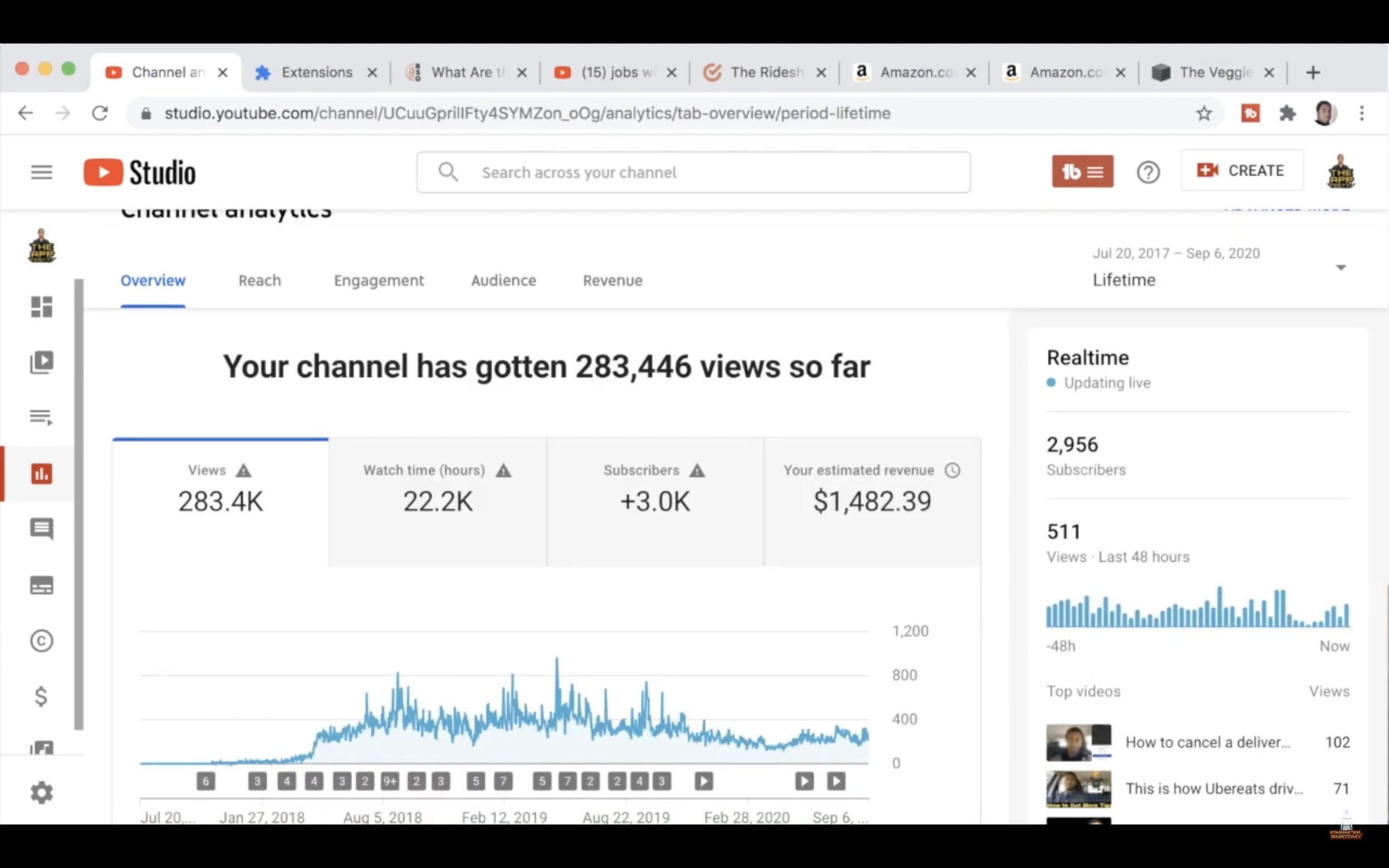
The screenshot above is a more recent shot of the channel earnings which is why the number is higher. At the time of the study, the channel had made $1,482.39 so we will use that number. While this is technically not affiliate marketing , i count it because it still largely stemmed from the 3 steps that we'll get into later.
Next we're going to show how much I made from Uber Eats referrals and a little bit of Uber of course too. Just going to go to earnings, and we're going to go to referrals, scroll down, and we're going to go to the amount that is already been earned. So that's $12,845.
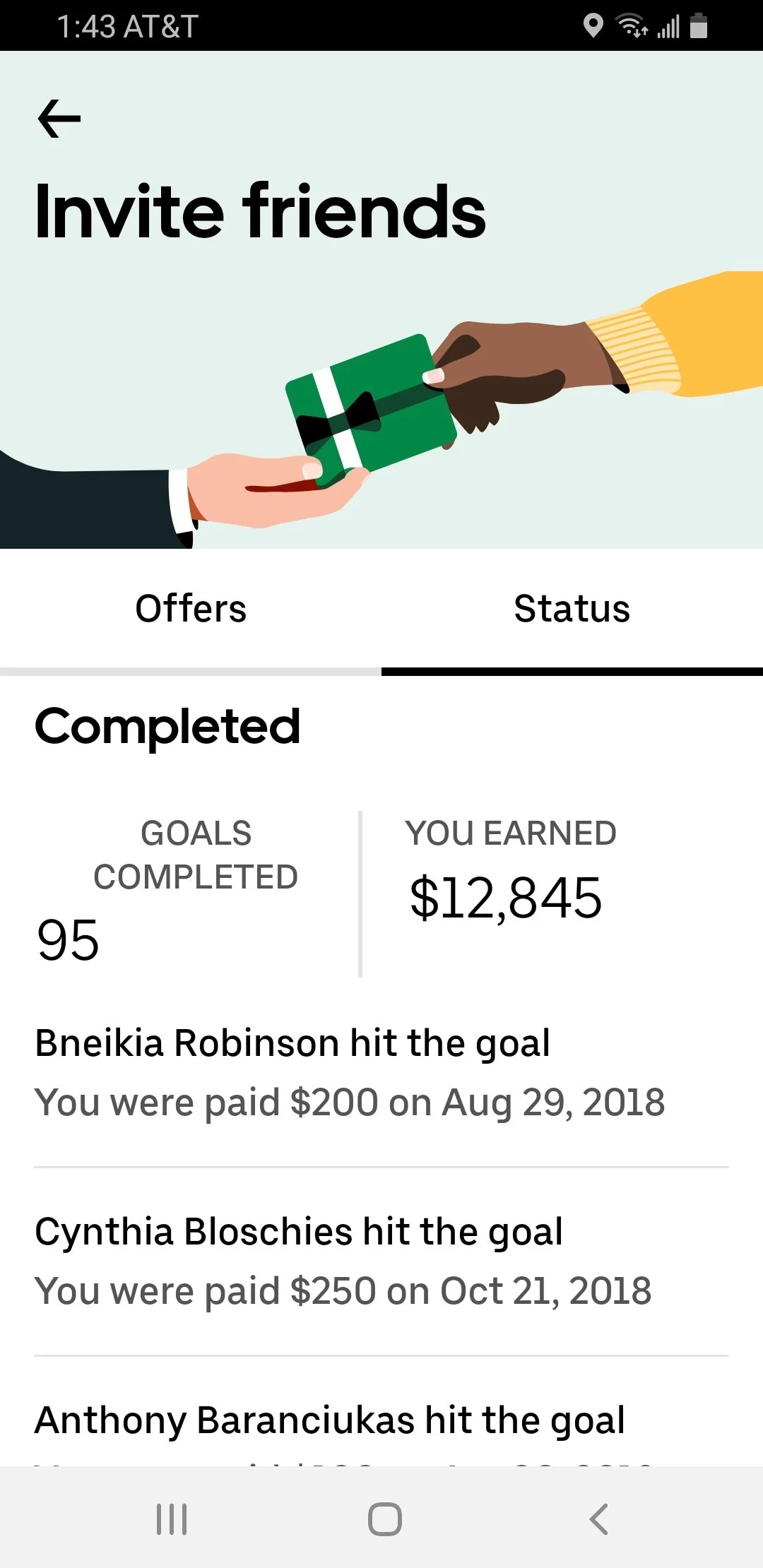
So now that you've seen the proof let's get into the steps and tactic that I used to make this a reality. Now, right off the bat, you do have to already have these two things set up before I even go into these three steps otherwise it's not going to mean anything. You have to pick a niche that you want to do affiliate marketing in.
So stereotypically, the three niches are health and wellness, something financial or relationships. You got to pick which one you want to focus on. And once you pick which one of those categories that you want to focus on, you got to niche down even further. So get a little sub category and really start providing value in that sub category. So for me, in this particular case, it was Uber and Uber Eats. More so Uber Eats and showing people how to make a lot of money with it.
So that's in the financial area, but I really niched down to a specific part in a financial area in terms of making money. Once that's been done, you need to pick a list of affiliates that you're actually going to sign up for so that you can get your commissions from. Those two things have to be done otherwise these three steps won't matter. But assuming that you've done those prior steps, we can get into the three steps which I used.
Step 1: Offer something of GREAT value
The first step is to offer something of great value to people for free. When I say great value, I'm not just talking about some throwaway thing that you're using just to get an email address or something. It has to really be great value and value is defined by how well you can get a person the result that they're looking for.
And if you can do it, you've accomplished your mission of providing great value. And if you can do it with the four letters attached, called F-R-E-E, you're going to position yourself to be in the right place to severely benefit from affiliate marketing. So what I did was, I created a YouTube channel called the app lifestyle. It also had a website called the app lifestyle, but the YouTube channel was the launching point.
With the YouTube channel I made a free Uber Eats course to show people how to take their Uber Eats earnings from whatever they were making, to being able to make between $11 and $18 an hour consistently. Not only did I do this, but I also showed how to make this money and actually reduce the amount of hours that you put in. So if you decide to put more hours in, then that means you're going to make more money.
Depending on your niche, it might be a person getting a certain weight. It might be a person getting a certain status in life. Whatever it is, if you're providing value and can give them the end result they want then you're going to be in the right spot.
Step 2: Make your offer easy to digest!
The second step that I did was I ordered all the information so that it was very easy and digestible for my audience. So it wasn't like they have to find everything from different places in my brand. I also didn't put any roadblocks towards them getting the result.
It actually is organized in a way so that they can just literally watch it if they have an hour of the time to spend on this course. They can then go out the next day or even later that day and start seeing immediate results.
We see it is organized in a very easy manner for the person to go onto the next part of the course and get results.
So we see seven must have Uber Eats items, Uber Eats tutorial. The 1st Part, how to handle a delivery. Part two, covering acceptance rate, cancellation rates or no wait times. Part three: what about hotspots? How do you use Uber Eats customer app to make you more money as a driver?
See all this is very organized and YouTube is actually recommending the next part in the course after a person watches that part because it's part of a series playlist.
Since this is a course, that works out greatly. But even if that's not the case, I've made sure that I've linked the next video in the card in the top right-hand corner and the video itself. So every opportunity someone has to watch the next part in the course, they can click on it. If at any point they want to go back and rewatch a certain part, they can just go back to the Uber Eats course playlist. That makes this easy and digestible.
Step 3: Get traffic to your value preposition!
The third way and here's where my hidden tech that comes into play is, you get traffic to whatever you're using to provide value. Now, in terms of YouTube, I haven't seen anyone talk about this. So I'm very excited to share this little tactic with you.
Everyone knows that YouTube algorithm plays a big role in getting traffic to your videos. And if you get traffic to your videos in affiliate marketing, that means there's more traffic for people to click on your links. I didn't mention this before, but you want to make sure you have your affiliate links in your description or whatever you're using to get value.
More traffic means more clicks, which means more money down the line for you. This is the tactic I used to get traffic to my YouTube channel, specifically the Uber Eats course. I found a very popular podcast where people are very open to making money in different ways and I advertised on that podcast. Now I did it in a very specific way. So you want to listen carefully.
I purchased a cheap domain from GoDaddy (It was less then $20). It was something very simple and that's key. You want to have something simple that someone can literally type in as they're hearing it and they can go to wherever it is you want them to go.
This is because we're going to use this domain and we're going to forward it, to whatever your value proposition is. In my particular case, it was the Uber Eats course, and the advertisement was basically "if you want to make more money, you should consider signing up for Uber Eats, go to www.makemoremoney.com. There, you can get a free Uber Eats course that shows you how to make between $11 and $18 an hour with Uber Eats on your own schedule as long as you have a car".
See, I was very specific and I used the word free. So I spoke to the result that people want, which is to make more money. And I also injected the word free, which is true because the course is free and it's on YouTube. Guess what happened? People went there and checked it out.
They started the Uber Eats course and they said, "Wait, hold on. This is more simple than I thought, let me go sign up." And since people got such great value from the course, they wanted to sign up using my link and my code. So my referral or affiliate code is in all my descriptions of all my videos. It's also pasted on the screen when I'm doing a video at some point during a video in the course. So this led them to go and sign up on the app lifestyle, or they would sign up for Uber directly and put the code in but it didn't stop there.
I also have a video where I talk about seven items that's good for Uber Eats drivers to have like an insulated bag. Accompanying that video is an article on the same thing. People would watch that video and then click on the article. This lead to many people getting some of those items in that article and the pictures in that article contain Amazon affiliate links. So when they buy, let's say the insulated bag, I would also get a commission on that purchase.
The funny thing about Amazon is they have a 24 hour cookie. If they buy anything in a 24 hour span, including what they're already buying, which is the insulated bag, then I get a commission off of that. In other words, they can buy a flat screen TV in addition to the insulated bag. The flat screen TV costs 500 bucks, but guess what? I get a commission based off that 500 bucks TV and an insulated bag!
The Grand Total
To summarize these three steps, I skipped out on the process of making a bunch of videos on YouTube, gradually building an audience until some people eventually start sharing it. Then the algorithm may give my videos some love. I bypassed that because that was too slow.
I decided to get traffic coming from outside of YouTube and that sent traffic to the Uber Eats course, which in turn, exploded the channel with the YouTube algorithm. This happen die to me getting a lot of traffic to come to me as opposed to fighting for it on the YouTube platform. Of course more views of my videos means more clicks on my affiliate links, which means more money for me.
So let's round the grand total up of how much I made with affiliate marketing using this tactic.
Amazon Affiliates: $437.18
The App Lifestyle: $ 1,482.39
Uber Referrals: $12,854
Grand total: $ 14,764.57
For those of you all that are really detailed, you know that's not exactly $14,000. It's actually more but $14,000 was a flat number I just had to put there. But this is the tactic I use to make this amount of money with affiliate marketing and I only spent $260.
So the popular podcasts that I decided to go with was a podcast called Tariq Radio and it cost $240 to advertise for four weeks on there. So my ad would run for four weeks after I purchased that ad. I spent a total of $260. $240 is for the podcast advertisement. And $20 was for the domain. And I arranged for the domains to redirect to the YouTube channel.
What was my ROI?
We're not done yet though!Now, what we're going to do next is we're going to find out what was my ROI (Return on investment) was. My investment in this case was the $260. My amount returned was $14,764.57.
ROI is calculated by subtracting the initial value of the investment (260) from the final value of the investment (14,764) , then dividing this new number by the cost of the investment (260), and, finally, multiplying it by 100. A visual of this is below.
$14,764 - $260 = $14,504
14,504/260 = 55.78
55.78 x 100 = 5,578%
So the ROI here is = 5,578%
That's the tactic I used to make over $14,000 using affiliate marketing. The biggest takeaway that you can get from this is to start using that podcast strategy. Find a podcast that is a great fit for you and advertise on it and make sure that the podcast has a lot of followers.
But even if it doesn't, if the followers have a tight connection with the host and they're open to making money, like the podcast is connected to money in some way, that's a huge bonus. It worth mention that if you feel you can get on the podcast as a guest, that works just as good. Just make the domain you give them simple to type in, and they're going to take you up on your offer and go to your free value proposition and then just sit back and watch the money come in.
That does it for this Article. If you have any questions or comments, feel free to leave them below. And if you found value in this article, checkout my book "The Anatomy Of Financial Success" I will catch you in the next one, don't forget to go out there and take control of your financial destiny!
Is Being An Uber Eats Driver Worth It In 2026
Some of you all may actually use Uber Eats pretty frequently as a customer, and the same applies to me. Have you ever considered being an actual Uber Eats driver, delivering people's food and making money in the process? Well, I'm here to give you five reasons why you should consider it, because I personally have done it, and I vastly enjoy it. If any of these reasons resonate with you, maybe it's something to consider. It's actually not that big a stretch to make between $11 and $20 an hour as a Uber Eats driver if you know what you're doing. That's why I'm pretty excited to share with you these reasons. So let's go ahead and hop into it.
The question is likely popped up in your head. How did you get involved with Uber Eats in the first place? I was driving for rideshare as a Uber driver. For those of y'all that want more details on that, you can read my five reasons why I became a Uber driver article. A few months after getting involved with Uber, in the app they kept harassing me. "Do you want to do Uber Eats? Do you want to do Uber Eats? Do you want to deliver Uber Eats?" I was kind of against it at first because they didn't have tipping on the platform at the time. People mainly give you cash tips, but they implemented tipping on a platform. That's when I said, "You know what? I'll actually give Uber Eats a try. It turns out, I liked it a lot. So much that they actually started rivaling how much I liked Uber Eats versus the normal Uber, which is kind of crazy.
Ever since then, Uber Eats has proved to be valuable in some ways. Even more so than being a Uber driver. That kind of ties into one of the reasons, so let's go ahead and just get into it.
It’s Mindless
The first reason is, it's mindless. When I say that, I mean it doesn't take a lot of mental energy, or hardly any. If we're being honest, probably after a week or two in, you'll get used to the app. From there, there's nothing more on the tech side you need to learn, and you can just kind of do this on autopilot where your mind is somewhere else. You will bump into some scenarios where something doesn't go as planned, so you might have to improvise like the customer forgot to put the gate codes. Then you got to call and figure out what the gate code is so you can complete the delivery. That kind of takes you out of the mindless autopilot I was telling you about.
Even things like that can be mitigated. If I see someone's in an apartment complex when I start out driving towards them, before I start driving towards them, I have a saved message in my phone that I send them. That message is "Hey, can you send me the gate code, and can you tell me the name of your apartments?" They send the info to me and the whole thing is more efficient. So even that stuff can be mitigated to make it mindless. With it being so mindless, you're free to think about other things, or just listen to your music in the car.
That's one advantage Uber Eats has over Uber X or rideshare in general. No one's in the car with Uber Eats. Listen to what you want and that includes audio books. A lot of books I have in my libary, I've never actually touched the book before, but I've listened to the audio book several times. I just got the physical book as a trophy. These books were largely listened to a while doing Uber Eats. And that actually ties into my second reason.
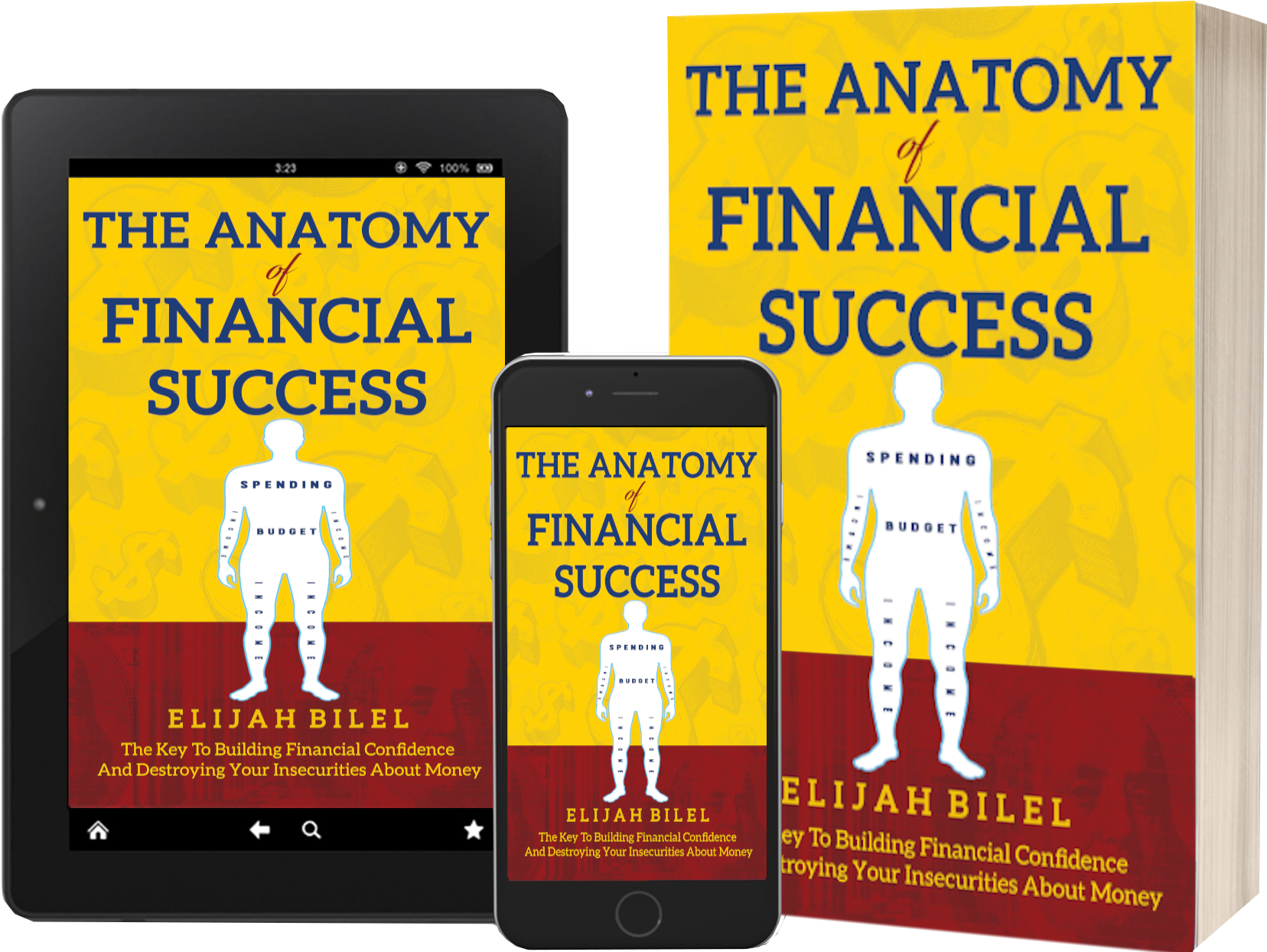
Want to listen to Elijah’s audiobook on personal finance? Click the picture below!
2. Silence Is Golden
I kind of jumped the gun, but second reason is, it's silent. No one else is in the car, listen to whatever you want. Listen to YouTube videos like the one at the top of this article about how to make more money or listen to ways to improve your health. You can listen to whatever rocks your boat. In my case, I can listen to the audio book while I'm just laying in my bed, or maybe while I'm working on my computer, but I don't like to listen to audio books when I'm doing work on a computer because I can't really give my full attention. I like to listen to music or something in the background. Uber Eats is perfect because there's nothing involved mentally. So reason one and two are kind of piggybacking off of each other, because you just listen to all these audio books and you can just really focus on soaking that game up. At the same time you can be delivering food and making money in a process. Since it's so mindless, it's not distracting you from the content of the audio book, it's beautiful.
For those of you that want to talk on the phone while you're delivering, I do that all the time too. Me and my friend Travis will be talking about all kinds of stuff while we're delivering food, because he was delivering for Uber Eats too.
3. $15+ An Hour Earnings
The third reason why I became an Uber Eats driver is you can make more than $15 an hour if you know what you're doing. What I mean by that is if you just do the stereotypical thing that everyone does, you might not make $15 an hour, but if you know how the Uber Eats algorithm works, you know exactly what restaurants to go to, which ones don't have long wait times, so you can get more deliveries in an hour. These are some tips of many, but if you know things like that, then it's not a stretch to make over $15 an hour, because you have the experience to do so, and also doing it is not that hard.
4. You’ll Learn Your City
The fourth reason why I became a Uber Eats driver, why you might want to consider it, is because you learn a lot about your city. See, when you're being a Uber driver this is true too, but you might be more focused on the person in the back, and not as much on your city. Since there's nothing else distracting you, you're going to notice things about your city. If you're like me, you'll still be listening to that audio book, but you can't help but notice things about your city that you didn't before. And if you are new to your city, this is a great way to learn a city.
You do a few deliveries for a little bit and you’ll know that city a lot better than when you first started. Sometimes that's just a better feeling. Knowing what streets to take and what's the fastest way to get to point A to point B. Just going to various parts of your city that you didn't even know existed because you didn’t have reason to go there, but delivery took you there. It's like, "Whoa, oh man, I just didn't know this."
For those of you that are house seeking, you might bump into a few houses for sale. You can write down the owner's information when you look at a sign and you call them up. You might actually find the perfect home for you. You get exposed to so much stuff. It's lost under your radar when you're just casually driving, but when you're delivering, you tend to pay attention more because you're trying to find a address. So you'll learn a lot more about your city.
5. You’ll Learn About A Lot Of New Restaurants
Speaking of learning about the city, number five is you'll learn a lot about restaurants. If you're like me, when I drop food off, I would ask the customer, "Hey, is that restaurant good?" And they would say, "Hey, yeah, it's pretty solid." Or "It's okay." Obviously, it's got to be decent, otherwise they wouldn't be ordering it. If they're a chatty person, they may actually share some details and you could also talk to the restaurants themselves. Obviously they're going to have a bias opinion, but you could ask them if they have certain things on the menu, or you can take a look at their menu while you're waiting for customer’s order. I've been a vegan for over 10 years, and I'll look at these menus of these restaurants. I'm looking for meat substitutes, like tofu, or seitan, Beyond meat or veggie burgers. I’ve learned a lot about various restaurants across my metroplex because you got to go there and pick the food up.
As someone who's a leader and founder of a vegan meet-up group called The Veggie Outers, where we go to restaurants and actually review them based on the vegan options they have, that was very helpful.
A picture of The Veggie Outers
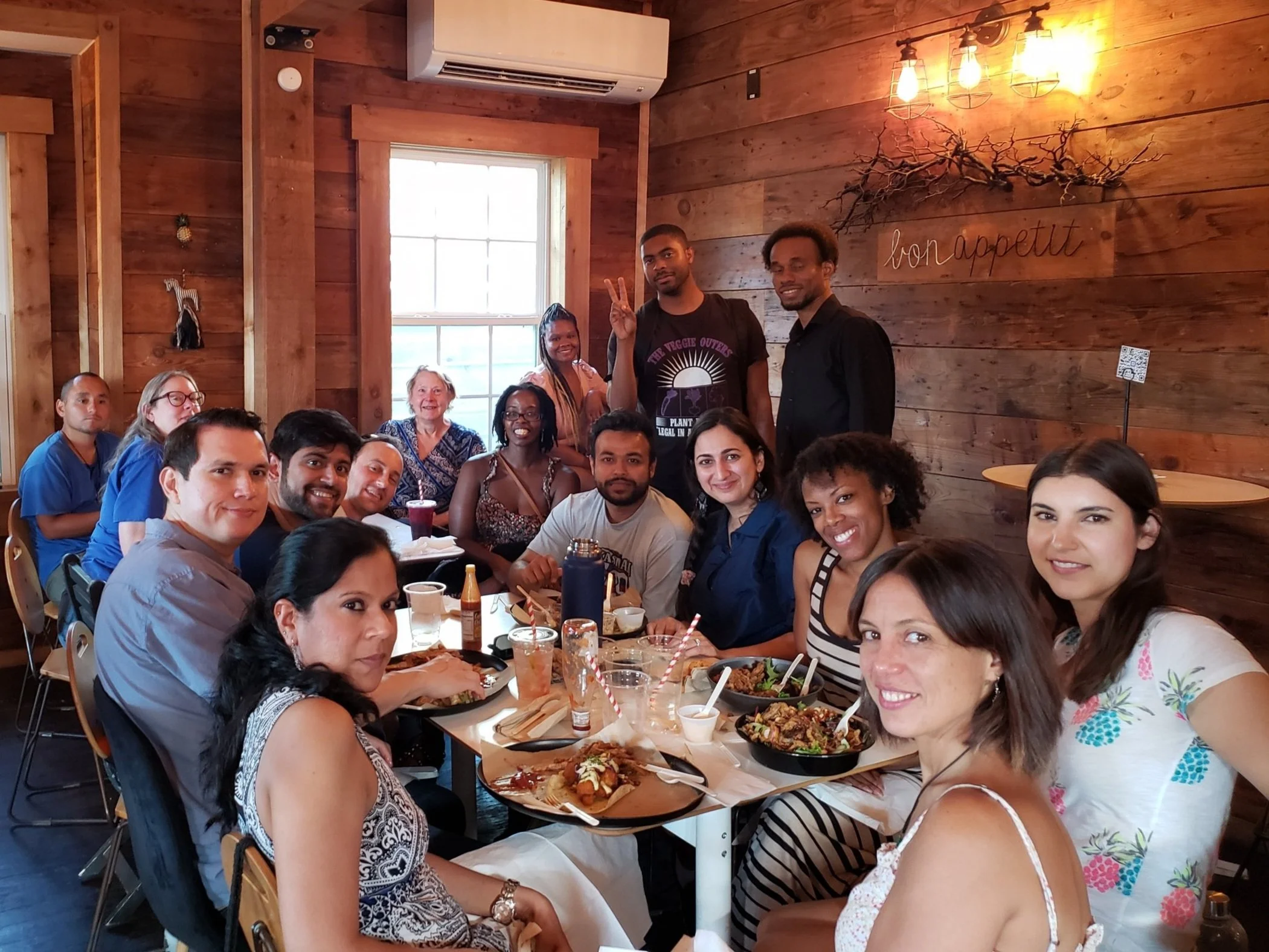
A lot of the restaurants that The Veggie Outers went to, they were based on me going there as an Uber Eats driver first, scaling their menu, and then I went there to actually try them out. I was like, "Hmm, this is a great place to bring The Veggie Outers." And that resulted in a lot of meet-ups that might not have happened otherwise. I got exposed to the restaurant through Uber Eats. So you'll learn a lot more about restaurants.
So to recap, we have number one, it's mindless. Number two, it's silent. Number three, you can make more than $15 per hour if you know what you're doing. Number four, you're going to learn more about your city. And number five, you're going to learn more about your restaurants in your city too.
I honestly can't recommend it enough. If anything, because of reasons one and two, because it's just an excuse to consume so many audio books. Whatever area of life that you're struggling in, finances, health and wellness, relationships, just grab some audio books on that, and get paid to lace yourself up with game in that area. If you are looking to get started, you’ll want to check out the podcast I did sharing 10 tips that help you make the most money in the least amount of time. That video is shared above reason 4. That’s it for now. I’ll catch you in the next article!